Comparing groups: which has more, which has fewer, which are equal.
More or Less? is a short story for children aged 3 to 6, about 3 minutes to read aloud. Read it free online with a picture on every page, or listen to it read aloud: a calm one for bedtime.
A gentle, educational story where animal friends gather for a picnic and learn to compare quantities. It introduces basic math concepts like more, fewer, and equal through visual matching. The narrative is entirely positive and conflict-free, making it an excellent tool for early numeracy.
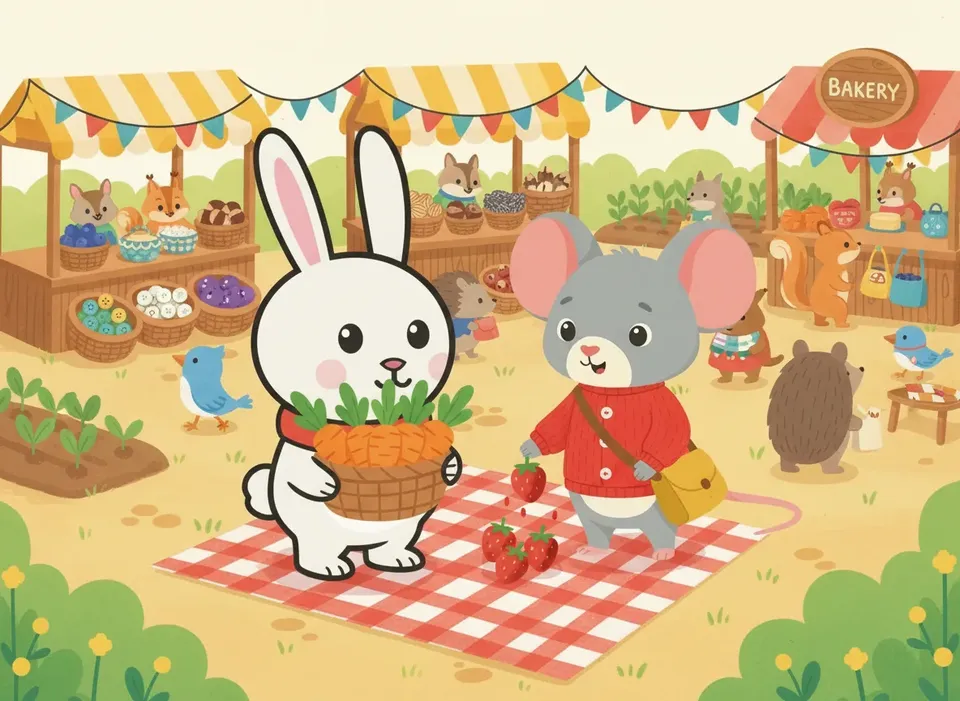
Rocky adjusted his red scarf and smiled. Today was the grand Garden Town Picnic! He stood by the bustling tiny animal market, holding a woven basket of fresh, crunchy carrots he had just pulled from the vegetable patch.
His friend Mia trotted up, her yellow satchel bouncing over her red cardigan. "I brought sweet strawberries!" she squeaked, her big pink ears twitching. She carefully poured the red berries onto a checkered picnic blanket.
Rocky and Mia brought carrots and strawberries to the picnic.
"Oh my," said Rocky, wiggling his long pink-lined ears. "Do we have enough snacks for everyone? Let's see... I have my carrots, and you have strawberries. Which pile has more?"
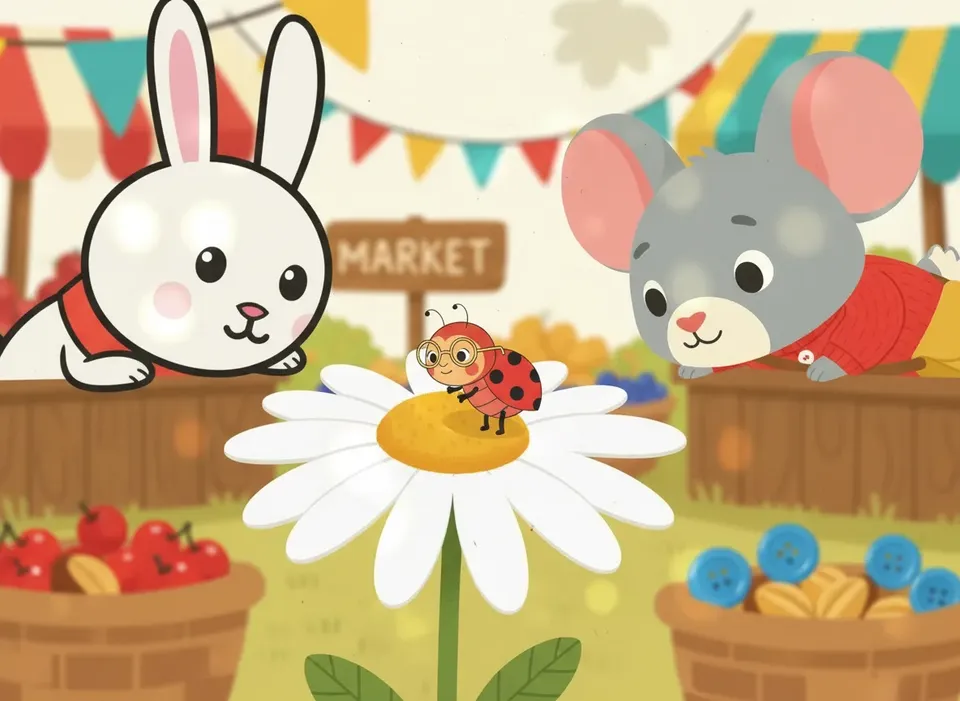
Dot the ladybird flew down and landed on a daisy. Her tiny round glasses glinted in the sun, and her exactly seven black spots looked very neat. "I love counting!" said Dot. "To see which has more, we can line them up side by side."
Dot the ladybird suggested they line up the snacks to count.
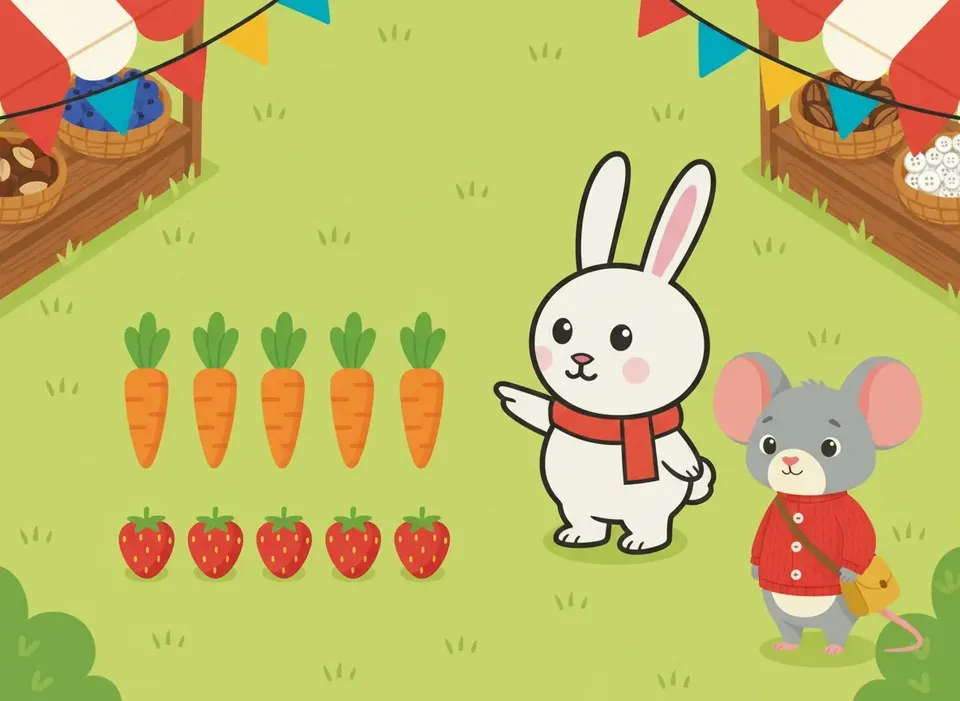
Rocky carefully lined up his carrots on the grass. "One, two, three, four, five," he counted out loud, touching each orange vegetable with a white paw. Mia lined up her red strawberries right below them. "One, two, three," she counted.
"Look," said Rocky, pointing at the two rows. "The carrot line is longer! Every strawberry has a carrot partner, but there are two carrots left over without a strawberry. Five is more than three."
Five carrots made a longer line than three strawberries.
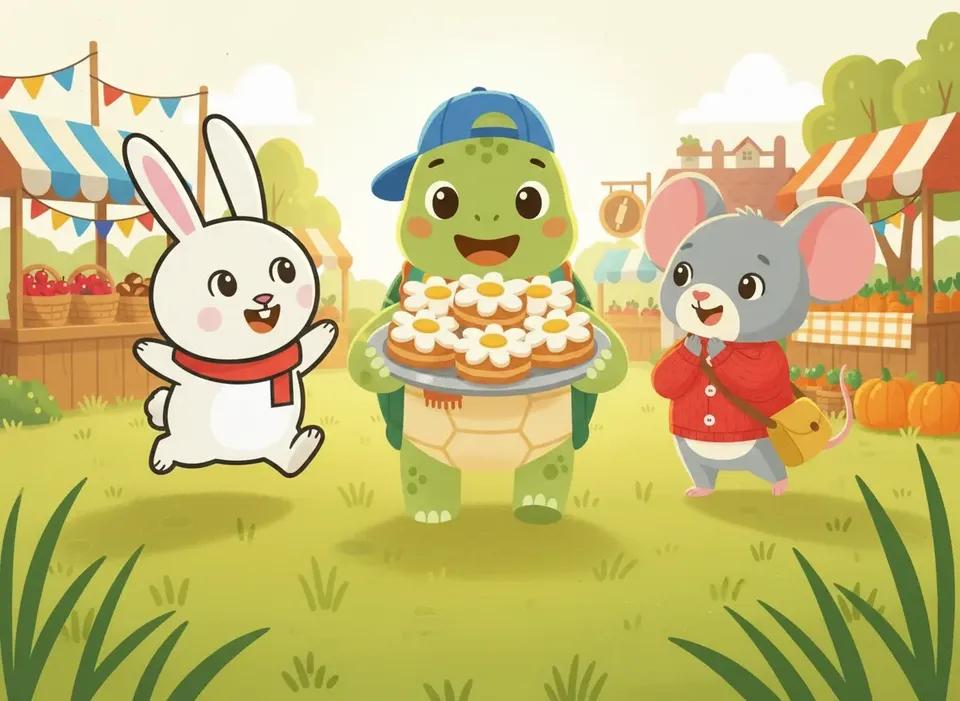
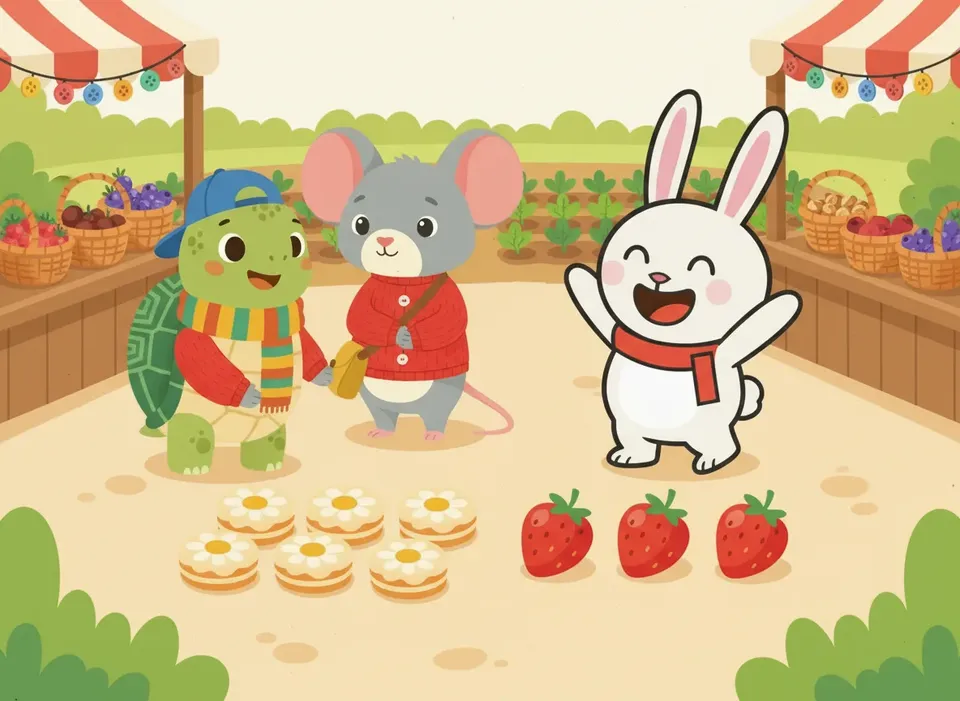
"That means we have fewer strawberries," Mia said proudly. Just then, Tumble the tortoise arrived. He wore a blue cap and a striped scarf, moving slowly but happily. He carried a shiny plate of daisy-cakes from the town bakery. "I brought treats!" he announced cheerfully.
Tumble the tortoise arrived with shiny daisy-cakes.
"Let's compare the daisy-cakes to my strawberries," said Mia. "I have three strawberries." Tumble carefully placed his little cakes in a neat row underneath the strawberries. "One, two, three, four, five, six!" he counted slowly, tapping each cake.
"Wow, six daisy-cakes!" Rocky cheered, his little smile growing wide. "Six is a bigger number than three. The line of cakes stretches much further. We have fewer strawberries and more cakes."
Six daisy-cakes is more than three strawberries!
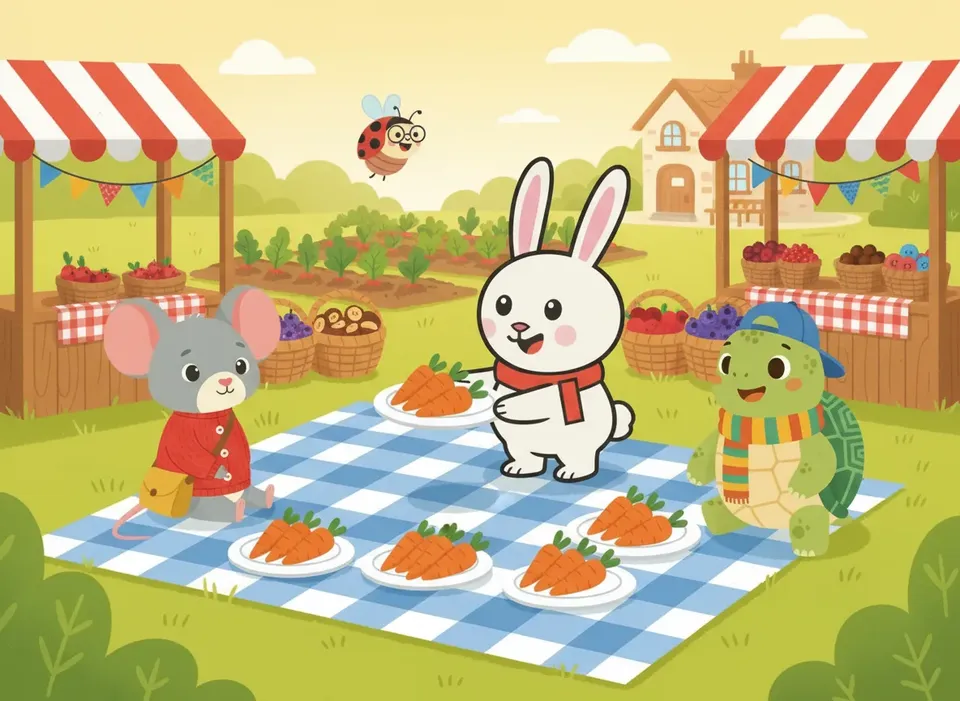
"Wait, what about the plates?" asked Dot, adjusting her glasses. "We have five plates for the picnic. Rocky, you have five carrots."
Rocky decided to test it. He put one carrot on each plate. "One plate, one carrot. Two plates, two carrots..." he counted. He touched each plate to make sure he didn't miss any. Soon, every single plate had exactly one carrot, with none left over.
Five carrots and five plates are exactly equal!
"They match perfectly!" Rocky beamed, his rosy cheeks puffing up with joy. "Five plates and five carrots means the groups are equal. No more, no fewer! Now, let's eat our wonderful picnic treats!"
An original Lullabunny story.
Questions to ask after reading
Rocky said that five plates and five carrots means the groups are...
What did Mia bring in her yellow satchel to share with her friends at the picnic?
How do you think the friends felt when they saw the long line of daisy-cakes Tumble brought?
Why did Dot suggest lining the snacks up side-by-side instead of just looking at the piles?
If we were going on a picnic today, what would you want to pack in your basket for us to share?