On Christmas Eve, a father tells his children a bedtime story about a brave little Pony Engine that tries to race the mighty Pacific Express all the way to the ocean.
The Pony Engine And The Pacific Express is a story for children aged 7 to 10 by William Dean Howells, about 21 minutes to read aloud. Read it free online with a picture on every page, or listen to it read aloud.
A father tells his children a surprisingly dark bedtime story about a little train engine that disobeys its mother, races a larger train across the country, and ultimately plunges into the ocean. The story features a tragic ending, including the death of the main character and the mother engine losing her mind from grief. While framed as a playful, teasing interaction between a father and his children, the story-within-a-story contains intense themes of death and permanent separation.
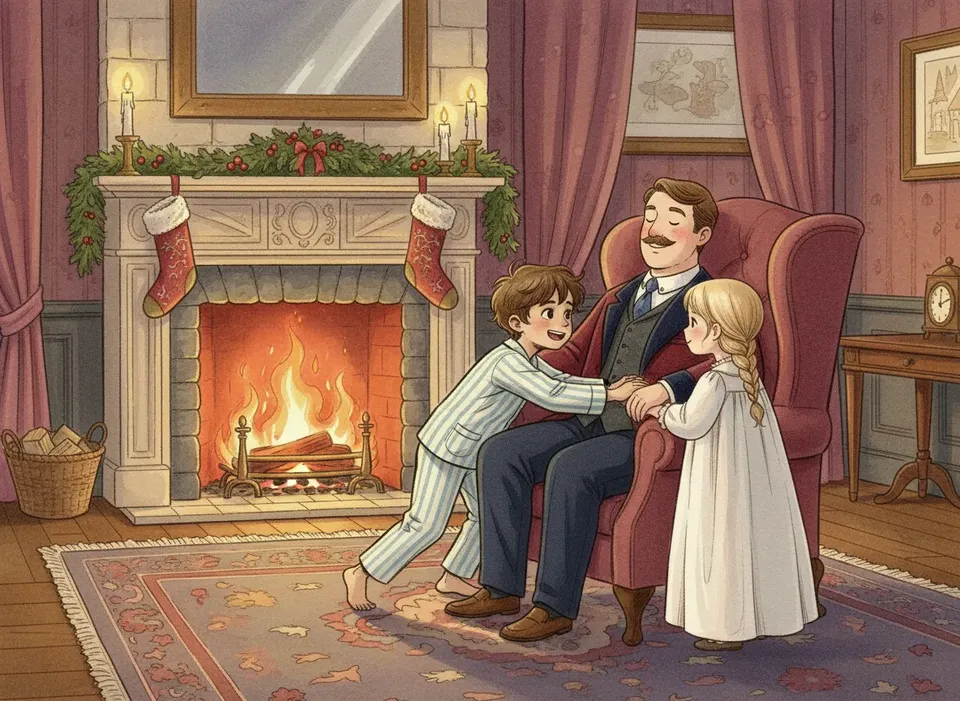
Christmas Eve, after the children had hung up their stockings and got all ready for St. Nic, they climbed up on the papa's lap to kiss him good-night, and when they both got their arms round his neck, they said they were not going to bed till he told them a Christmas story. Then he saw that he would have to mind, for they were awfully severe with him, and always made him do exactly what they told him; it was the way they had brought him up. He tried his best to get out of it for a while; but after they had shaken him first this side, and then that side, and pulled him backward and forward till he did not know where he was, he began to think perhaps he had better begin. The first thing he said, after he opened his eyes, and made believe he had been asleep, or something, was, "Well, what did I leave off at?" and that made them just perfectly boiling, for they understood his tricks, and they knew he was trying to pretend that he had told part of the story already; and they said he had not left off anywhere because he had not commenced, and he saw it was no use. So he commenced.
The children demanded a Christmas story before bed.
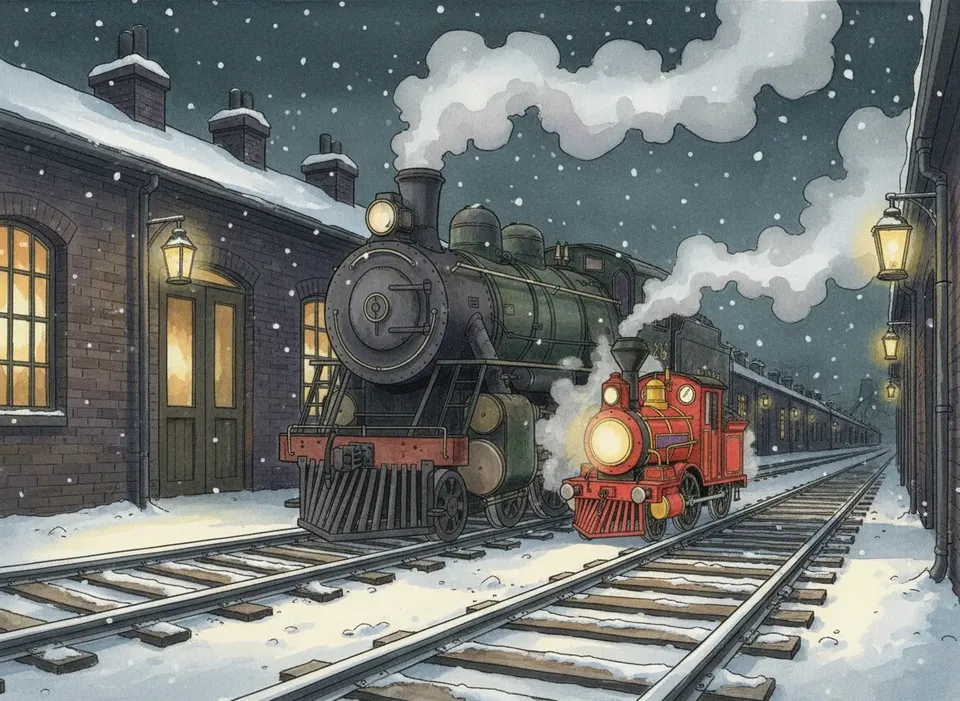
"Once there was a little Pony Engine that used to play round the Fitchburg Depot on the side tracks, and sleep in among the big locomotives in the car-house—"
The little girl lifted her head from the papa's shoulder, where she had dropped it. "Is it a sad story, papa?"
"How is it going to end?" asked the boy.
"Well, it's got a moral," said the papa.
"Oh, all right, if it's got a moral," said the children; they had a good deal of fun with the morals the papa put to his stories. The boy added, "Go on," and the little girl prompted, "Car-house."
The papa said, "Now every time you stop me I shall have to begin all over again." But he saw that this was not going to spite them any, so he went on: "One of the locomotives was its mother, and she had got hurt once in a big smash-up, so that she couldn't run long trips any more. She was so weak in the chest you could hear her wheeze as far as you could see her. But she could work round the depot, and pull empty cars in and out, and shunt them off on the side tracks; and she was so anxious to be useful that all the other engines respected her, and they were very kind to the little Pony Engine on her account, though it was always getting in the way, and under their wheels, and everything. They all knew it was an orphan, for before its mother got hurt its father went through a bridge one dark night into an arm of the sea, and was never heard of again; he was supposed to have been drowned. The old mother locomotive used to say that it would never have happened if she had been there; but poor dear No. 236 was always so venturesome, and she had warned him against that very bridge time and again. Then she would whistle so dolefully, and sigh with her air-brakes enough to make anybody cry. You see they used to be a very happy family when they were all together, before the papa locomotive got drowned. He was very fond of the little Pony Engine, and told it stories at night after they got into the car-house, at the end of some of his long runs. It would get up on his cow-catcher, and lean its chimney up against his, and listen till it fell asleep. Then he would put it softly down, and be off again in the morning before it was awake. I tell you, those were happy days for poor No. 236. The little Pony Engine could just remember him; it was awfully proud of its papa."
The old mother locomotive was respected by all.
The boy lifted his head and looked at the little girl, who suddenly hid her face in the papa's other shoulder. "Well, I declare, papa, she was putting up her lip."
"I wasn't, any such thing!" said the little girl. "And I don't care! So!" and then she sobbed.
"Now, never you mind," said the papa to the boy. "You'll be putting up your lip before I'm through. Well, and then she used to caution the little Pony Engine against getting in the way of the big locomotives, and told it to keep close round after her, and try to do all it could to learn about shifting empty cars. You see, she knew how ambitious the little Pony Engine was, and how it wasn't contented a bit just to grow up in the pony-engine business, and be tied down to the depot all its days. Once she happened to tell it that if it was good and always did what it was bid, perhaps a cow-catcher would grow on it some day, and then it could be a passenger locomotive. Mammas have to promise all sorts of things, and she was almost distracted when she said that."
"I don't think she ought to have deceived it, papa," said the boy. "But it ought to have known that if it was a Pony Engine to begin with, it never could have a cow-catcher."
"Couldn't it?" asked the little girl, gently.
"No; they're kind of mooley."
The little girl asked the papa, "What makes Pony Engines mooley?" for she did not choose to be told by her brother; he was only two years older than she was, anyway.
"Well; it's pretty hard to say. You see, when a locomotive is first hatched—"
"Oh, are they hatched, papa?" asked the boy.
"Well, we'll call it hatched," said the papa; but they knew he was just funning. "They're about the size of tea-kettles at first; and it's a chance whether they will have cow-catchers or not. If they keep their spouts, they will; and if their spouts drop off, they won't."
"What makes the spout ever drop off?"
"Oh, sometimes the pip, or the gapes—"
The children both began to shake the papa, and he was glad enough to go on sensibly. "Well, anyway, the mother locomotive certainly oughtn't to have deceived it. Still she had to say something, and perhaps the little Pony Engine was better employed watching its buffers with its head-light, to see whether its cow-catcher had begun to grow, than it would have been in listening to the stories of the old locomotives, and sometimes their swearing."
The little engine hoped a cow-catcher would grow.
"Do they swear, papa?" asked the little girl, somewhat shocked, and yet pleased.
"Well, I never heard them, near by. But it sounds a good deal like swearing when you hear them on the up-grade on our hill in the night. Where was I?"
"Swearing," said the boy. "And please don't go back, now, papa."
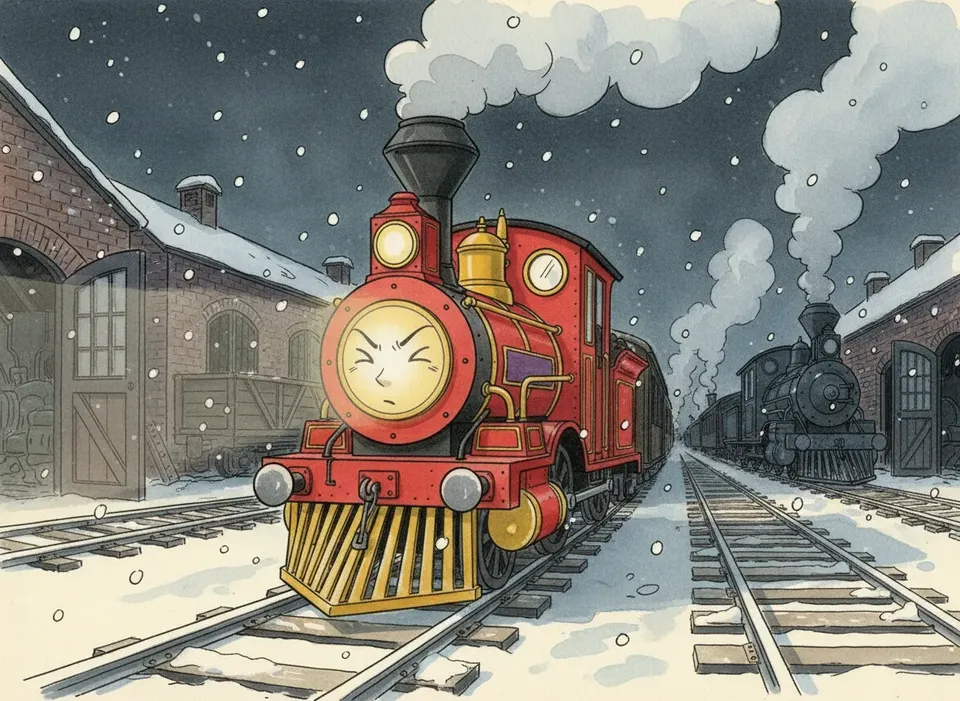
"Well, I won't. It'll be as much as I can do to get through this story, without going over any of it again. Well, the thing that the little Pony Engine wanted to be, the most in this world, was the locomotive of the Pacific Express, that starts out every afternoon at three, you know. It intended to apply for the place as soon as its cow-catcher was grown, and it was always trying to attract the locomotive's attention, backing and filling on the track alongside of the train; and once it raced it a little piece, and beat it, before the Express locomotive was under way, and almost got in front of it on a switch. My, but its mother was scared! She just yelled to it with her whistle; and that night she sent it to sleep without a particle of coal or water in its tender.
"But the little Pony Engine didn't care. It had beaten the Pacific Express in a hundred yards, and what was to hinder it from beating it as long as it chose? The little Pony Engine could not get it out of its head. It was just like a boy who thinks he can whip a man."
The boy lifted his head. "Well, a boy can, papa, if he goes to do it the right way. Just stoop down before the man knows it, and catch him by the legs and tip him right over."
"Ho! I guess you see yourself!" said the little girl, scornfully.
"Well, I could!" said the boy; "and some day I'll just show you."
"Now, little cock-sparrow, now!" said the papa; and he laughed. "Well, the little Pony Engine thought he could beat the Pacific Express, anyway; and so one dark, snowy, blowy afternoon, when his mother was off pushing some empty coal cars up past the Know-Nothing crossing beyond Charlestown, he got on the track in front of the Express, and when he heard the conductor say 'All aboard,' and the starting gong struck, and the brakemen leaned out and waved to the engineer, he darted off like lightning. He had his steam up, and he just scuttled.
He darted off like lightning in front of the Express.
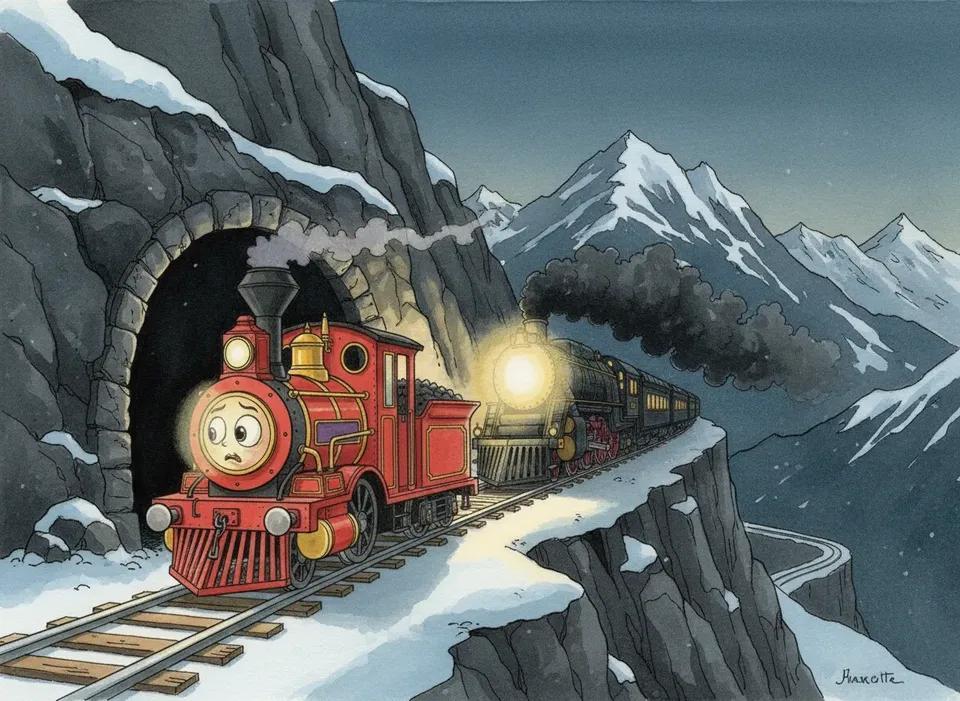
"Well, he was so excited for a while that he couldn't tell whether the Express was gaining on him or not; but after twenty or thirty miles, he thought he heard it pretty near. Of course the Express locomotive was drawing a heavy train of cars, and it had to make a stop or two—at Charlestown, and at Concord Junction, and at Ayer—so the Pony Engine did really gain on it a little; and when it began to be scared it gained a good deal. But the first place where it began to feel sorry, and to want its mother, was in Hoosac Tunnel. It never was in a tunnel before, and it seemed as if it would never get out. It kept thinking, What if the Pacific Express was to run over it there in the dark, and its mother off there at the Fitchburg Depot, in Boston, looking for it among the side-tracks? It gave a perfect shriek; and just then it shot out of the tunnel. There were a lot of locomotives loafing around there at North Adams, and one of them shouted out to it as it flew by, 'What's your hurry, little one?' and it just screamed back, 'Pacific Express!' and never stopped to explain. They talked in locomotive language—"
It shot out of the dark tunnel with a shriek.
"Oh, what did it sound like?" the boy asked.
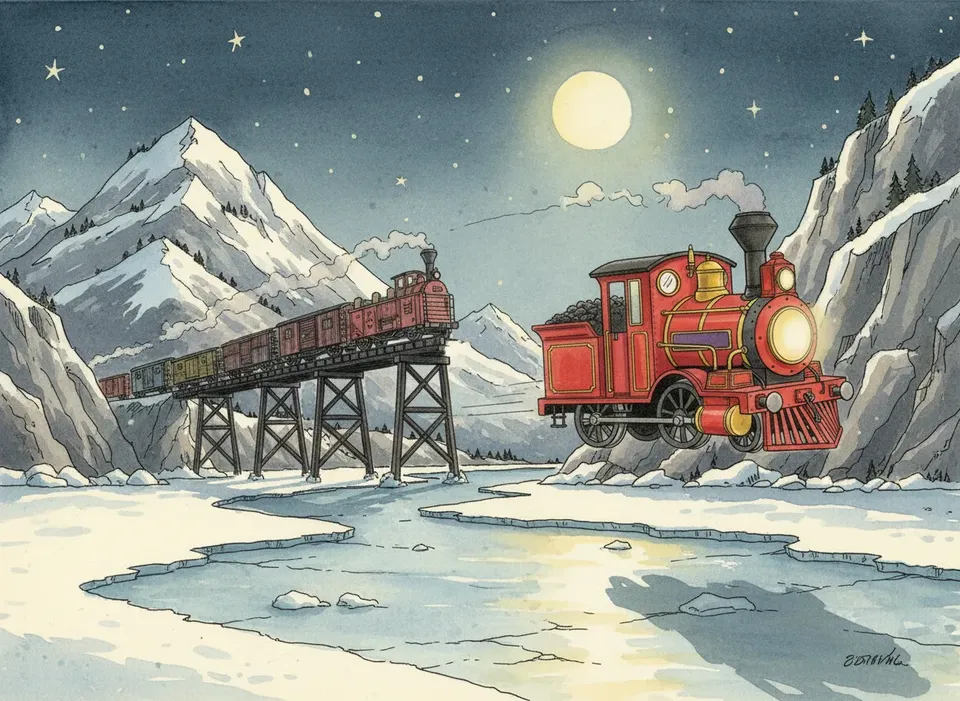
"Well, pretty queer; I'll tell you some day. It knew it had no time to fool away, and all through the long, dark night, whenever, a locomotive hailed it, it just screamed, 'Pacific Express!' and kept on. And the Express kept gaining on it. Some of the locomotives wanted to stop it, but they decided they had better not get in its way, and so it whizzed along across New York State and Ohio and Indiana, till it got to Chicago. And the Express kept gaining on it. By that time it was so hoarse it could hardly whisper, but it kept saying, 'Pacific Express! Pacific Express!' and it kept right on till it reached the Mississippi River. There it found a long train of freight cars before it on the bridge. It couldn't wait, and so it slipped down from the track to the edge of the river and jumped across, and then scrambled up the embankment to the track again."
It slipped down the bank and jumped across.
"Papa!" said the little girl, warningly.
"Truly it did," said the papa.
"Ho! that's nothing," said the boy. "A whole train of cars did it in that Jules Verne book."
"Well," the papa went on, "after that it had a little rest, for the Express had to wait for the freight train to get off the bridge, and the Pony Engine stopped at the first station for a drink of water and a mouthful of coal, and then it flew ahead. There was a kind old locomotive at Omaha that tried to find out where it belonged, and what its mother's name was, but the Pony Engine was so bewildered it couldn't tell. And the Express kept gaining on it. On the plains it was chased by a pack of prairie wolves, but it left them far behind; and the antelopes were scared half to death. But the worst of it was when the nightmare got after it."
"The nightmare? Goodness!" said the boy.
"I've had the nightmare," said the little girl.
"Oh yes, a mere human nightmare," said the papa. "But a locomotive nightmare is a very different thing."
"Why, what's it like?" asked the boy. The little girl was almost afraid to ask.
"Well, it has only one leg, to begin with."
"Pshaw!"
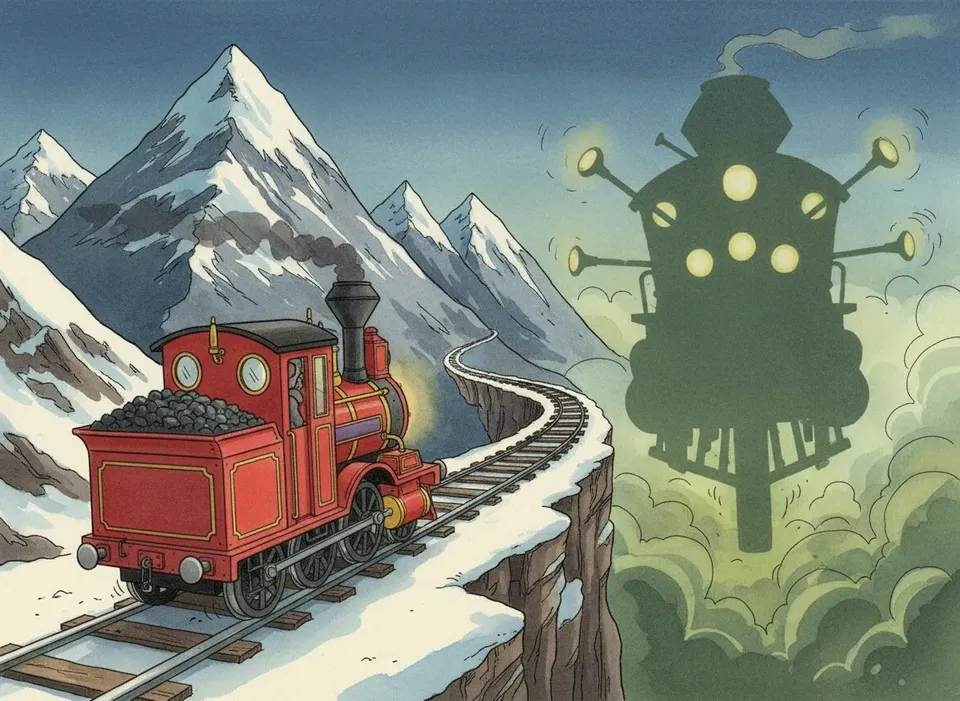
"Wheel, I mean. And it has four cow-catchers, and four head-lights, and two boilers, and eight whistles, and it just goes whirling and screeching along. Of course it wobbles awfully; and as it's only got one wheel, it has to keep skipping from one track to the other."
The nightmare went whirling and screeching along.
"I should think it would run on the cross-ties," said the boy.
"Oh, very well, then!" said the papa. "If you know so much more about it than I do! Who's telling this story, anyway? Now I shall have to go back to the beginning. Once there was a little Pony En—"
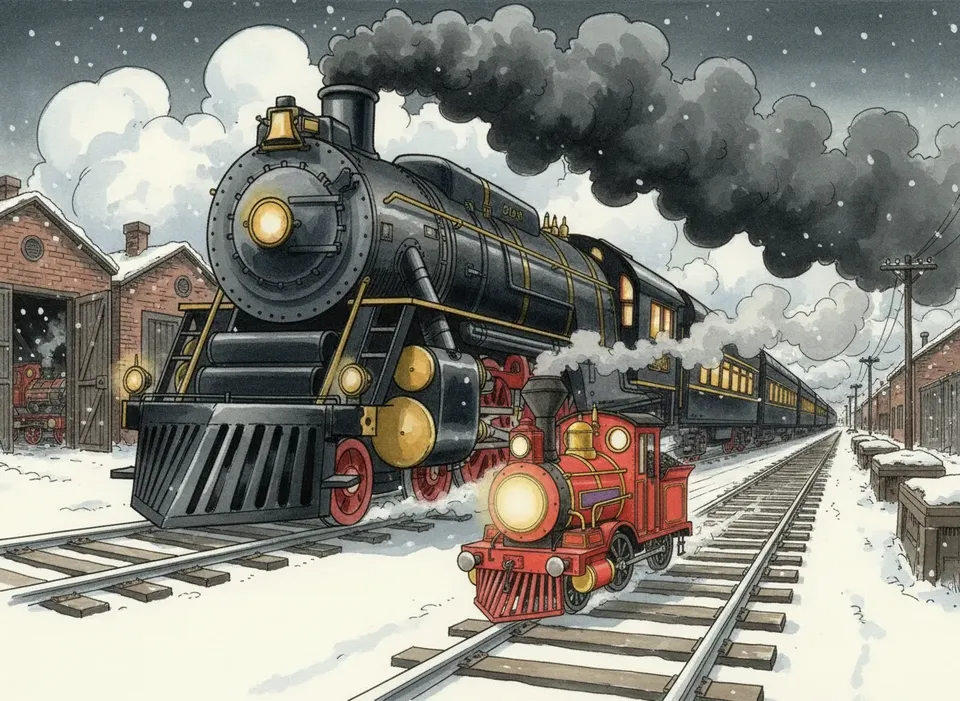
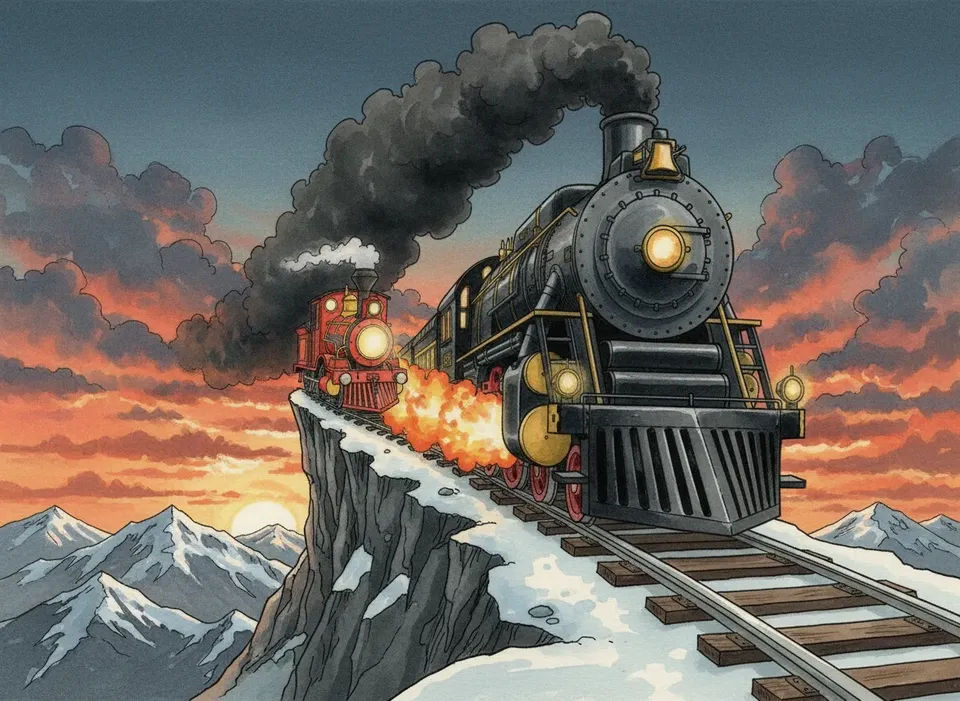
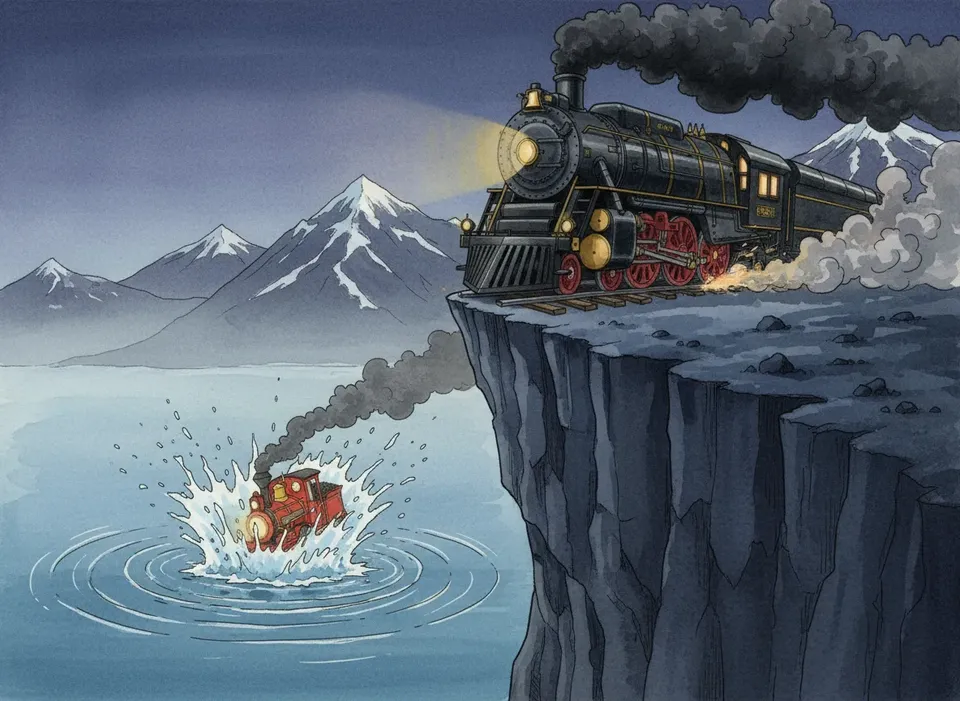
They both put their hands over his mouth, and just fairly begged him to go on, and at last he did. "Well, it got away from the nightmare about morning, but not till the nightmare had bitten a large piece out of its tender, and then it braced up for the home-stretch. It thought that if it could once beat the Express to the Sierras, it could keep the start the rest of the way, for it could get over the mountains quicker than the Express could, and it might be in San Francisco before the Express got to Sacramento. The Express kept gaining on it. But it just zipped along the upper edge of Kansas and the lower edge of Nebraska, and on through Colorado and Utah and Nevada, and when it got to the Sierras it just stooped a little, and went over them like a goat; it did, truly; just doubled up its fore wheels under it, and jumped. And the Express kept gaining on it. By this time it couldn't say 'Pacific Express' any more, and it didn't try. It just said 'Express! Express!' and then ''Press! 'Press!' and then ''Ess! 'Ess!' and pretty soon only ''Ss! 'Ss!' And the Express kept gaining on it. Before they reached San Francisco, the Express locomotive's cow-catcher was almost touching the Pony Engine's tender; it gave one howl of anguish as it felt the Express locomotive's hot breath on the place where the nightmare had bitten the piece out, and tore through the end of the San Francisco depot, and plunged into the Pacific Ocean, and was never seen again. There, now," said the papa, trying to make the children get down, "that's all. Go to bed." The little girl was crying, and so he tried to comfort her by keeping her in his lap.
It doubled up its fore wheels and jumped like a goat.It plunged into the Pacific Ocean and was never seen again.
The boy cleared his throat. "What is the moral, papa?" he asked, huskily.
"Children, obey your parents," said the papa.
"And what became of the mother locomotive?" pursued the boy.
"She had a brain-fever, and never quite recovered the use of her mind again."
The boy thought awhile. "Well, I don't see what it had to do with Christmas, anyway."
"Why, it was Christmas Eve when the Pony Engine started from Boston, and Christmas afternoon when it reached San Francisco."
"Ho!" said the boy. "No locomotive could get across the continent in a day and a night, let alone a little Pony Engine."
"But this Pony Engine had to. Did you never hear of the beaver that clomb the tree?"
"No! Tell—"
"Yes, some other time."
"But how could it get across so quick? Just one day!"
"Well, perhaps it was a year. Maybe it was the next Christmas after that when it got to San Francisco."
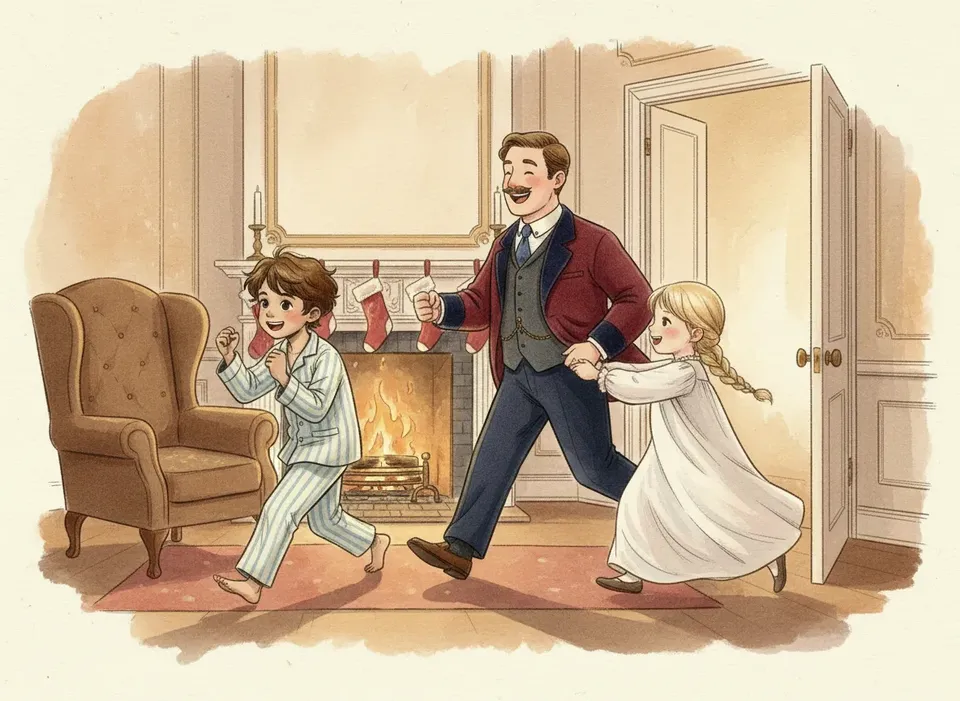
The papa set the little girl down, and started to run out of the room, and both of the children ran after him, to pound him.
The children ran after him to pound him.
When they were in bed the boy called down-stairs to the papa, "Well, anyway, I didn't put up my lip."
Public-domain text, first published 1892. Illustrations and narration: original, by Lullabunny.
Questions to ask after reading
At the very end, the papa says the moral of the story is: 'Children, obey your ______.'
What was the name of the dark, scary place that the Pony Engine had to go through where it first started to miss its mother?
The papa told a silly part about the Pony Engine jumping over a whole river. How do you imagine a little train looks when it's flying through the air?
Why was the little Pony Engine so determined to race the big Pacific Express all the way to the ocean?
The Pony Engine was very proud of its papa and wanted to be just like him. Who is someone in our family that you feel proud of?